What Is a VPN Tunnel and How Does It Secure Your Data?

The internet has become part of almost everything we do. We use it to check emails, join video meetings, access cloud applications, and share important files. For businesses, it's the backbone of daily operations. But every time data moves across the internet, there's a chance it could be intercepted if it isn't properly protected.
That's where VPNs come in.
If you've ever asked yourself what is a VPN tunnel, the simplest answer is this: it's a secure, encrypted pathway that protects your data as it travels between your device and the network you're connecting to. Instead of sending information across the internet where others could potentially view it, a VPN tunnel encrypts everything before it leaves your device. That makes the data unreadable to anyone who isn't authorized to access it.
This technology has become especially important as more employees work remotely and businesses rely on cloud-based services. Whether someone is logging in from home, catching up on work at an airport, or connecting through public Wi-Fi at a café, a VPN tunnel helps keep sensitive information private.
In this article, we'll break down how VPN tunnels work, why they're important, and how businesses use them to protect their data every day.
What Is a VPN Tunnel?
A VPN tunnel is an encrypted connection between your device and a VPN server. Once that connection is established, all of your internet traffic passes through a protected channel before reaching its destination.
Without a VPN, your data travels across public networks in a way that could leave it exposed to hackers, unsecured networks, or other unauthorized parties. A VPN tunnel changes that by encrypting your traffic first, so even if someone intercepts the data, they won't be able to make sense of it.
An easy way to picture this is to imagine sending an important document through the mail. If it's placed in a regular envelope, someone could potentially open it along the way. Now imagine placing that same document inside a locked container that only the intended recipient can unlock. That's essentially what a VPN tunnel does for your online data.
For businesses, this means employees can securely access internal applications, company servers, shared files, and cloud platforms without exposing confidential information.
Why Is a VPN Tunnel Important?
The internet wasn't built with privacy as its main priority. Every website you visit, every application you open, and every file you upload passes through multiple networks before reaching its destination.
Without encryption, that information may be vulnerable to interception.
For businesses, the risks go beyond personal privacy. Sensitive customer records, financial reports, employee information, and confidential documents can all become targets if the connection isn't properly secured.
A VPN tunnel helps reduce those risks by encrypting data before it leaves the device. Anyone who intercepts the traffic sees only encrypted information instead of readable data.
This protection becomes even more valuable when employees connect from locations outside the office, such as:
- Home offices
- Hotels
- Airports
- Coffee shops
- Shared coworking spaces
Public Wi-Fi networks are convenient, but they often lack strong security. A VPN tunnel adds an extra layer of protection, allowing employees to work more safely wherever they happen to be.
How Does a VPN Tunnel Work?
Although the technology behind VPN tunneling is quite sophisticated, the process itself is surprisingly simple. From the user's perspective, everything happens almost instantly.
Step 1: A User Starts the VPN Connection
The process begins when someone opens a VPN application or uses a company-managed device with a VPN already configured.
The VPN client contacts a VPN server and requests a secure connection.
Step 2: The User's Identity Is Verified
Before the tunnel is created, the VPN checks that the user is authorized to connect.
Depending on the organization's security policies, this could involve a username and password, a digital certificate, or multi-factor authentication (MFA). This verification step helps prevent unauthorized users from accessing company resources.
Step 3: The Data Is Encrypted
After authentication, the VPN encrypts all outgoing traffic.
Encryption transforms readable information into coded data that can only be unlocked with the correct encryption key. Even if someone intercepts the traffic while it's moving across the internet, they won't be able to read it.
Step 4: A Secure Tunnel Is Established
Once encryption is in place, the VPN creates a protected tunnel between the user's device and the VPN server.
From this point forward, all internet traffic flows through this encrypted connection rather than traveling openly across public networks.
Step 5: Data Travels Through the Tunnel
Every request, whether it's opening a website, accessing a company application, or uploading a document, moves through the encrypted tunnel.
The VPN server receives the information, processes it, and securely forwards it to its intended destination.
Step 6: The Data Is Decrypted
When the information reaches the VPN server or the authorized destination, it's decrypted so the receiving system can process it normally.
All of this takes place within moments, allowing users to browse and work securely without noticing any interruption to their experience.
What Makes a VPN Tunnel Secure?
A VPN tunnel isn't secure because of a single feature. Instead, several security technologies work together to protect your connection from start to finish.
Encryption
Encryption is what makes a VPN effective. Before any information leaves your device, it's converted into unreadable code that can only be unlocked with the correct decryption key.
Most business VPNs rely on strong encryption standards such as AES-256, which is widely trusted across industries. Even if cybercriminals manage to intercept encrypted traffic, they won't be able to understand what they're looking at.
Authentication
Encryption protects the data, but authentication protects access.
Before a VPN tunnel is created, the system verifies the identity of the user or device trying to connect. Depending on the organization's security policies, this could involve passwords, security certificates, or multi-factor authentication.
This extra verification step helps ensure that only approved users can reach company resources.
Secure VPN Protocols
VPN protocols define how the secure connection is created and maintained. Each protocol has its own strengths, with some focusing on speed while others prioritize security or compatibility.
Some of the most widely used VPN protocols include:
- OpenVPN
- WireGuard
- IKEv2/IPSec
- SSL/TLS VPN
Choosing the right protocol depends on the organization's needs, the devices being used, and the level of security required.
Data Integrity
Protecting data isn't just about keeping it private. It's also about making sure nothing changes while it's traveling across the network.
VPN tunnels include integrity checks that can detect if information has been modified during transmission. If data has been tampered with, the system can identify the issue before it's processed.
Types of VPN Tunnels
Different organizations have different networking needs, so there isn't a one-size-fits-all approach to VPN tunneling. The most common types include:
Remote Access VPN
This is the type most people are familiar with. It allows individual employees to connect securely to the company's network from home, while traveling, or from any other remote location.
It's a practical solution for businesses with hybrid or fully remote teams.
Site-to-Site VPN
Companies with multiple offices often use site-to-site VPNs to connect separate locations over the internet.
Instead of employees creating individual VPN connections, entire office networks communicate securely with one another. Staff in different branches can access shared systems as if they were working from the same location.
Client-to-Site VPN
A client-to-site VPN creates a secure connection between a single device and an organization's private network.
It's commonly used for contractors, consultants, and employees who need secure access to company resources from personal or managed devices.
Business Use Cases for VPN Tunneling
VPN tunnels solve real security challenges that businesses face every day. As organizations become more distributed, protecting data wherever employees work has become just as important as securing the office itself.
Secure Remote Employee Access
Employees no longer need to be inside the office to access business applications or internal systems.
A VPN tunnel creates a secure path between their device and the company's network, allowing them to work safely from home or while traveling without exposing sensitive information.
Protecting Public Wi-Fi Connections
Working from a hotel lobby or coffee shop is convenient, but public Wi-Fi networks aren't always secure.
Without protection, attackers on the same network may attempt to intercept internet traffic. A VPN tunnel encrypts the connection before data reaches the public network, making it much harder for anyone to access confidential information.
Protecting Company Data
Every organization handles valuable information, whether it's customer records, financial reports, product designs, or internal communications.
A VPN tunnel helps protect that information while it's moving between employees, cloud services, and company systems, reducing the chances of data being intercepted along the way.
Supporting Distributed Teams
Many businesses now have employees spread across different cities, countries, or even continents.
VPN tunnels make it possible for everyone to securely access the same applications, shared drives, and internal resources without needing to be physically connected to the office network.
VPN Tunnel vs. Regular Internet Connection
Although both allow you to access online services, they offer very different levels of protection.
VPN Tunnel vs. VPN: What's the Difference?
These terms are often used interchangeably, but they don't mean exactly the same thing.
A VPN is the complete service that manages secure connections. It handles user authentication, encryption, traffic routing, and communication between devices and networks.
A VPN tunnel is one part of that service. It's the encrypted pathway that carries data securely between your device and the VPN server.
A simple way to think about it is this: the VPN is the entire security system, while the tunnel is the protected route your data travels through.
Why Businesses Still Rely on VPN Tunnels
Cybersecurity has changed dramatically over the years, but VPN tunnels continue to play an important role in protecting business networks. While newer security models such as Zero Trust have become more common, VPNs still provide a dependable way to secure remote connections and protect sensitive data as it moves across the internet.
For many organizations, employees need access to company resources from different locations and devices. A VPN tunnel makes those connections more secure by encrypting data before it leaves the device. This reduces the risk of unauthorized access, whether someone is working from home, traveling, or using a public network.
That said, a VPN shouldn't be viewed as a complete security solution on its own. Today's businesses benefit most from a layered approach that combines VPNs with identity management, endpoint protection, and device management.
For example, an MDM solution can automatically configure VPN settings across managed devices, enforce security policies, and ensure employees follow company compliance requirements. It also gives IT administrators greater visibility into device health and security.
Organizations can further reduce risks by restricting access to unsafe websites. If your workforce primarily uses Android devices, learning how to block websites on Android can help prevent users from accessing malicious or inappropriate content. In situations where employees only need access to approved business tools, it's equally useful to whitelist websites remotely, ensuring devices can connect only to trusted websites.
Combined with reliable MDM software, VPN tunnels become part of a broader security strategy that helps organizations protect company data without making remote work more complicated.
Frequently Asked Questions
What is a VPN tunnel?
A VPN tunnel is an encrypted connection between your device and a VPN server. It creates a protected pathway for your internet traffic, making it much harder for unauthorized users to view or intercept your data.
How does a VPN tunnel keep data secure?
It encrypts your internet traffic before it leaves your device. Even if someone captures the data while it's in transit, they won't be able to read it without the correct encryption key.
Is using a VPN tunnel on public Wi-Fi a good idea?
Yes. Public Wi-Fi networks often lack strong security, making them a common target for cyberattacks. A VPN tunnel encrypts your connection, adding an extra layer of protection whenever you're using shared or unsecured networks.
Do businesses still use VPN tunnels?
Absolutely. Many organizations continue to rely on VPN tunnels to provide employees with secure remote access to internal applications, cloud services, and company resources.
Can a VPN tunnel stop all cyberattacks?
No. A VPN tunnel protects data while it's traveling across the internet, but it doesn't eliminate every security risk. Businesses should also use tools such as multi-factor authentication, endpoint protection, firewalls, and Mobile Device Management to build a stronger overall security posture.
Conclusion
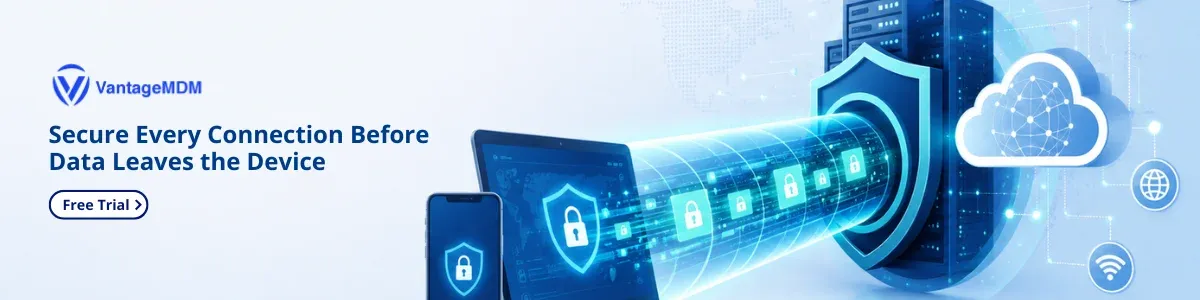
Understanding what is a VPN tunnel makes it easier to see why this technology remains a core part of modern cybersecurity. By encrypting internet traffic and creating a secure path between users and business networks, VPN tunnels help protect sensitive information from interception and unauthorized access.
For organizations with remote or hybrid workforces, they're still one of the most practical ways to secure everyday business operations. Their value increases even further when they're paired with device management and other security controls.
As businesses continue to embrace flexible work, protecting every connection becomes just as important as protecting the network itself. A VPN tunnel, supported by a robust Mobile Device Management solution, helps create a safer environment for employees while giving IT teams greater control over corporate devices and data.